


 Home Page


 0850 480 80 84


What Are the Features of a Chicken Rotisserie Machine?
25.11.2025A chicken rotisserie machine is designed to cook poultry evenly, efficiently, and with consistent flavor...
A chicken rotisserie machine is designed to cook poultry evenly, efficiently, and with consistent flavor, making it an essential appliance for restaurants, delis, and takeaway shops. These machines stand out because they offer high cooking capacity, durable construction, and strong energy-saving performance—all key factors for professional kitchens seeking both speed and quality.
A modern rotisserie unit ensures uniform heat circulation, resulting in crispy skin and juicy meat. This cooking consistency is important not only for customer satisfaction but also for businesses that depend on predictable output at peak hours. Many operators prefer rotisserie technology because it reduces labor, increases product yield, and supports high-volume service.
What Are the Capacities and Sizes of Chicken Machines?
The capacity of a commercial rotisserie varies widely, and choosing the right size depends on your business model. Most professional units accommodate anywhere from 6 to 60 chickens per cycle, allowing both small cafés and large restaurants to operate efficiently. The first thing to evaluate is how many portions you need to produce during busy periods.
Rotisserie sizes typically range from compact countertop models to large floor-standing units. Countertop versions are ideal for limited spaces and lower sales volume, while bigger cabinets suit supermarkets or food courts where demand is continuous. This size diversity helps businesses optimize workflow and reduce waiting times for customers.
Real-world use cases show that medium-sized restaurants often prefer 12–24 bird machines, as this range balances space and productivity well. Large operators—such as supermarket chains—choose 40+ bird models to meet daily demand without slowing down service. Measuring your kitchen layout and estimating daily output will make the selection process easier.
Where Can You Buy a Chicken Rotisserie Machine?
You can purchase rotisserie systems from commercial kitchen equipment suppliers, online industrial marketplaces, or specialized distributors who focus on roasting technologies. Local dealers often provide installation support, while online platforms offer competitive pricing and a wider range of options. Many businesses also request demo videos or visit showrooms to physically compare features.
When purchasing, it is wise to evaluate after-sales services such as warranty, spare parts availability, and technical support. These factors ensure long-term satisfaction and reduce operational risks. Reliable suppliers typically guide buyers through product selection, helping them choose a model aligned with their daily production needs.
Are the Body Materials of Chicken Machines Durable and High Quality?
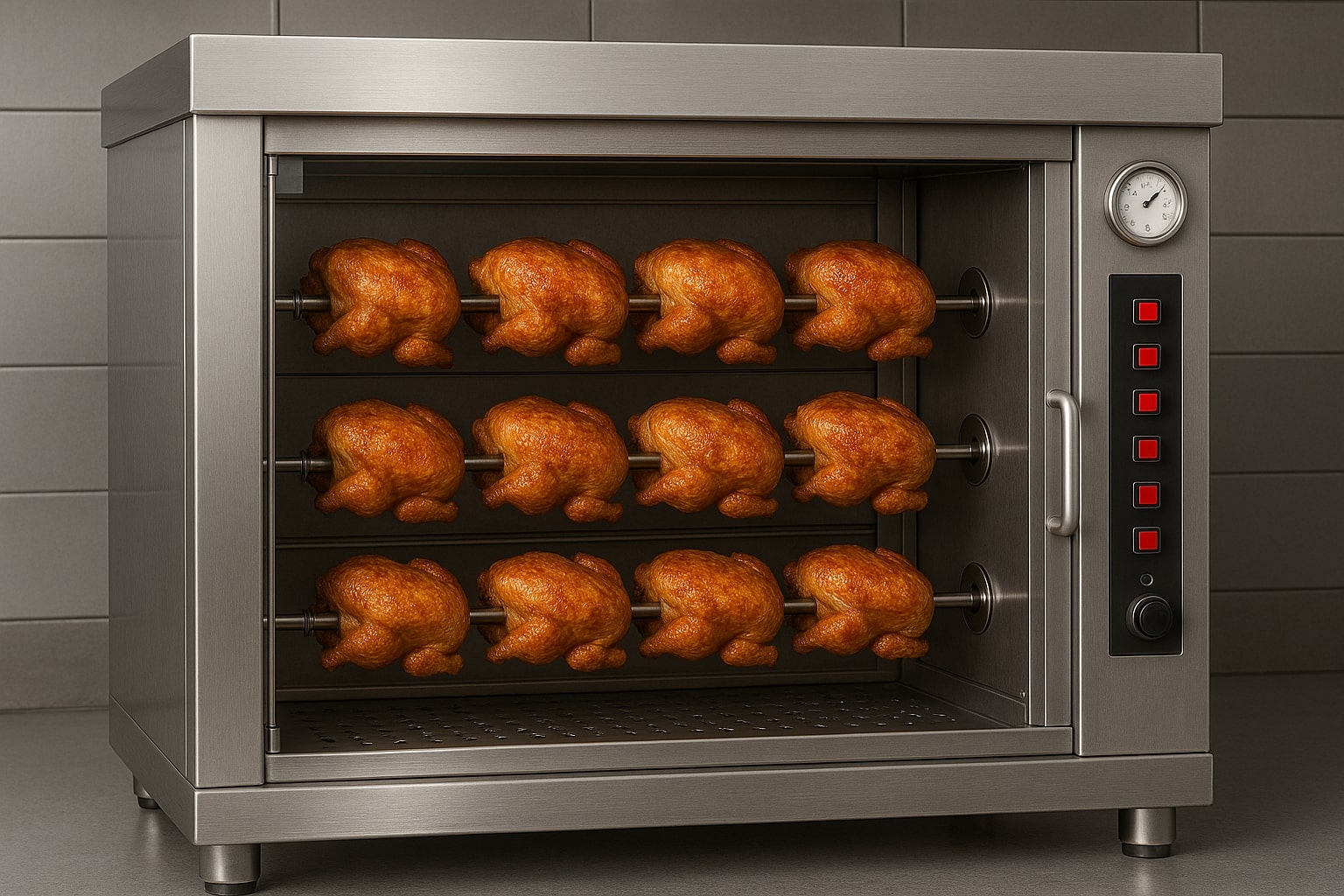
Most professional rotisserie units are made from stainless steel because it is resistant to heat, corrosion, and heavy commercial use. This robust construction ensures long-term durability, making the equipment suitable for continuous operation throughout the day. Stainless steel also prevents rust, which is essential for maintaining hygiene in food service environments.
High-quality rotisserie frames are designed to withstand both high temperatures and constant rotation. Internal components—such as spits, bearings, and motor mechanisms—must support heavy loads without losing stability. Leading manufacturers frequently use double-walled insulation to retain heat and reduce energy loss.
For businesses prioritizing hygiene, easy-to-clean surfaces are a major advantage. Smooth steel panels, removable trays, and accessible interior compartments help staff maintain cleanliness with minimal effort. This reduces downtime and supports compliance with food safety standards in professional kitchens.
How Energy-Efficient Are Chicken Machines?
Energy efficiency is a major selling point for modern rotisserie systems. These machines are engineered to use less electricity or gas while maintaining consistent high temperatures, allowing businesses to lower operational costs. Efficient heating elements circulate heat evenly, shortening cooking times and improving product quality.
Energy-saving models often include features like programmable timers, insulated doors, and variable-speed motors. These mechanisms ensure the machine operates only when necessary and avoids excessive power consumption. Many units also incorporate LED lighting to reduce internal heat accumulation and enhance product visibility.
Advantages of energy-efficient designs include reduced utility bills, faster cooking cycles, and lower environmental impact. Some manufacturers report up to 20–30% savings compared to older models, especially in high-volume kitchens. Investing in a low-consumption unit supports sustainable operation and long-term profitability.
A commercial rotisserie offers consistent cooking performance, strong durability, and energy-saving benefits, making it a strategic investment for any food service operator. Before purchasing, evaluate your daily sales volume, available kitchen space, and maintenance needs. Choosing a model with high-quality materials and smart power management will help you serve flavorful, evenly roasted poultry with minimal effort.
If you aim to improve menu variety or increase customer satisfaction, upgrading to a modern roasting system is a practical step. Reliable capacity, durable construction, and efficient energy usage all contribute to a smoother workflow and better end-product quality. With the right selection, your business can deliver consistent results and maximize profitability using a Chicken Roast Machine.


