


 Home Page


 0850 480 80 84


What are the Dimensions of an Industrial Refrigerator?
Understanding the dimensions of an commercial refrigerator is essential for any commercial kitchen, food service provider, or food storage facility aiming to optimize space, enhance operational flow, and maintain food safety standards. Unlike residential models, industrial refrigerators come in a variety of sizes and configurations tailored to different needs — from compact under-counter models to massive multi-door units and prep tables. The size of your refrigerator not only affects storage capacity but also impacts your energy consumption, kitchen layout, and overall workflow efficiency.
In this guide, we’ll explore different types of industrial refrigerators and their respective dimensions, helping you determine which one aligns best with your specific operational needs.
Standard Reach-In Refrigerator Dimensions
Standard reach-in refrigerators are among the most commonly used refrigeration units in commercial kitchens. Their design allows for easy access to stored items while maximizing vertical storage space. These models are ideal for restaurants, bakeries, cafeterias, and any business that requires frequent, quick access to ingredients.
Typically, these refrigerators measure between 24 to 36 inches in width for single-door units, while two-door versions range from 48 to 55 inches, and three-door models may extend to 78 inches or more. Depth usually falls between 30 and 35 inches, allowing enough room for large food pans and containers. The height ranges from 78 to 84 inches, accommodating multiple shelves for organized storage.
The compact yet efficient design of standard reach-in refrigerators makes them a staple in environments where quick access and reliable cold storage are priorities. Selecting the correct size is vital to prevent crowding or underutilization of space.
Two-Door vs. Three-Door Reach-In Sizes
Choosing between two-door and three-door reach-in refrigerators involves more than just selecting a larger or smaller unit — it's about understanding your kitchen’s workflow, space availability, and volume of stored goods. Both options serve high-demand environments, but they cater to different levels of storage and operational intensity.
Two-door reach-in models generally offer between 50 to 70 cubic feet of internal storage space, making them suitable for medium-sized kitchens, cafes, or institutions with moderate food inventory. These units often have widths between 48 and 55 inches. On the other hand, three-door models can exceed 75 to 100 cubic feet in capacity and stretch up to 85 inches in width or more. This makes them ideal for large-scale food production environments or businesses that stock a wide variety of perishable items.
In terms of depth and height, both two-door and three-door models are fairly similar to standard reach-ins. However, the additional width of a three-door unit requires more floor space, which could be a limitation in narrower kitchen layouts.
Deciding between the two should be based on your daily storage needs, staff accessibility, and the physical space in your kitchen. While three-door models offer extensive storage, they can limit maneuverability in compact workspaces.
Under-Counter & Worktop Refrigerator Dimensions
Under-counter and worktop refrigerators are designed for efficiency and ergonomic convenience in small or densely equipped kitchens. These units serve dual purposes — keeping ingredients within arm’s reach while also providing a functional work surface or fitting seamlessly beneath prep tables and counters.
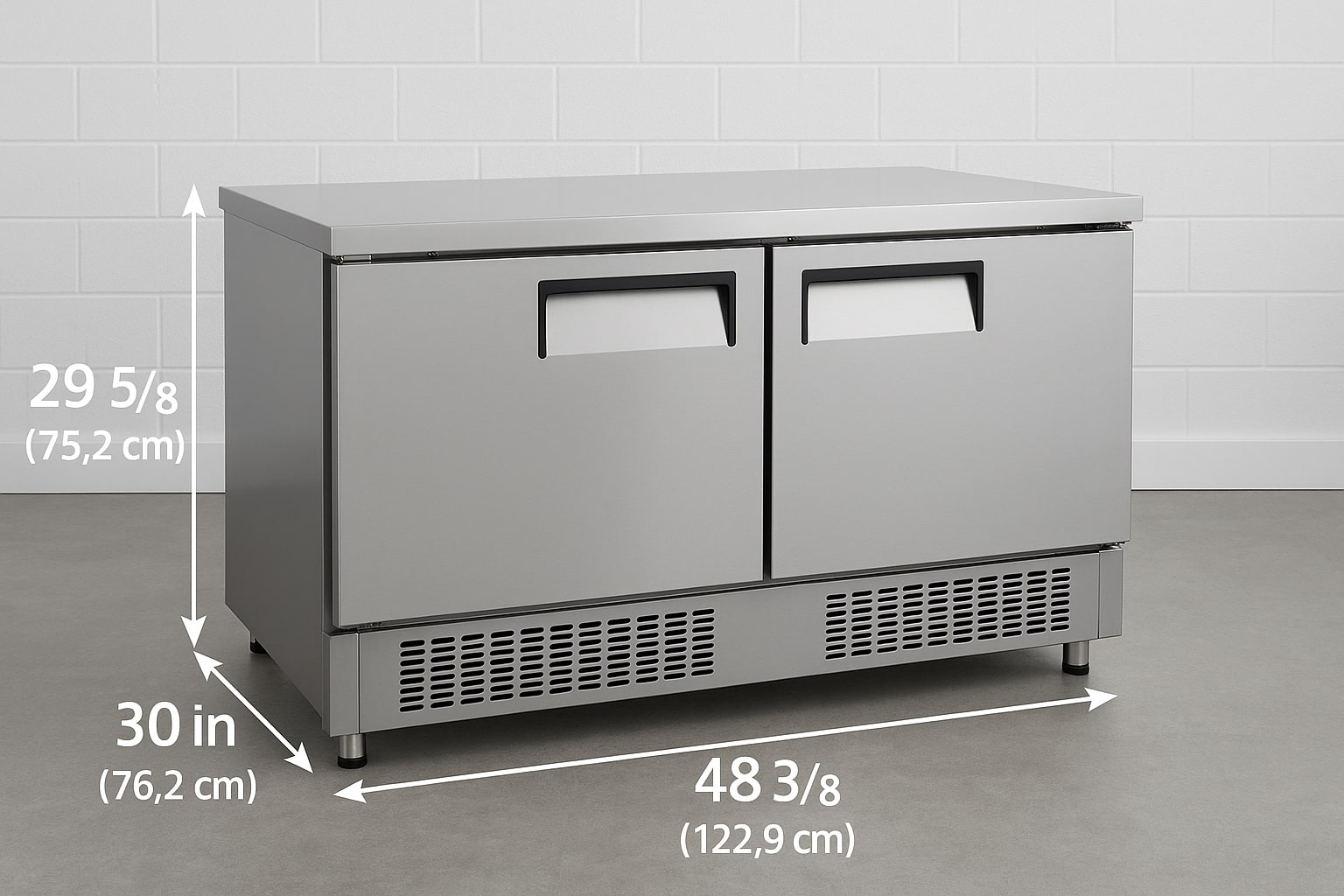
Under-counter refrigerators typically have a height between 32 and 36 inches to fit beneath standard countertops. Widths range from 27 to 72 inches depending on the number of doors or drawers, and depth is commonly around 30 inches. These units are perfect for bars, small cafes, or prep stations where space is limited, but access to chilled items is essential.
Worktop refrigerators, while similar in dimensions to under-counter units, feature reinforced surfaces that serve as prep areas. Their widths and depths mirror under-counter models, but their construction supports heavier use and may include splash guards or cutting board surfaces for added utility.
Both types of refrigerators help streamline food preparation processes by minimizing movement and reducing the time staff spend retrieving ingredients from remote locations. When selecting one, consider the surrounding kitchen layout, required prep space, and volume of items to be stored.
Prep Table (Sandwich/Salad) Refrigerator Sizes
Prep table refrigerators, often used for sandwiches and salads, are indispensable in high-volume service environments where speed and organization are critical. These units provide cold storage beneath a dedicated prep area with built-in pan holders on top, keeping ingredients fresh and within easy reach.
The standard dimensions for prep table refrigerators vary based on the number of pans and overall width. Smaller models designed for tight spaces may start at 27 inches in width, while larger units can reach up to 72 inches or more. Heights typically range from 42 to 46 inches, and the depth is commonly between 30 and 36 inches.
These refrigerators often come with one to three sections or compartments, each with its own door. The top section usually accommodates 1/6-size or 1/3-size food pans, depending on configuration. Additional features such as cutting boards, sneeze guards, and insulated pan covers enhance both hygiene and workflow.
Choosing the right size is vital for balancing food safety and kitchen productivity. A unit that’s too small may require frequent restocking, while an oversized unit could consume unnecessary energy and occupy valuable floor space. Evaluate your menu needs, food turnover rate, and available room to make an informed decision.
What Are the Advantages of Using an Industrial Refrigerator?
Industrial refrigerators offer a range of advantages that go far beyond those provided by residential or low-capacity commercial models. They are built for durability, performance, and energy efficiency — all critical aspects in a busy foodservice operation.
One of the most notable benefits is their high storage capacity. These units are designed to handle large quantities of food, reducing the need for frequent deliveries and enabling bulk purchasing, which can lower procurement costs. Furthermore, their powerful compressors and advanced cooling systems ensure stable temperatures even during peak usage hours, helping to prevent spoilage and foodborne illnesses.
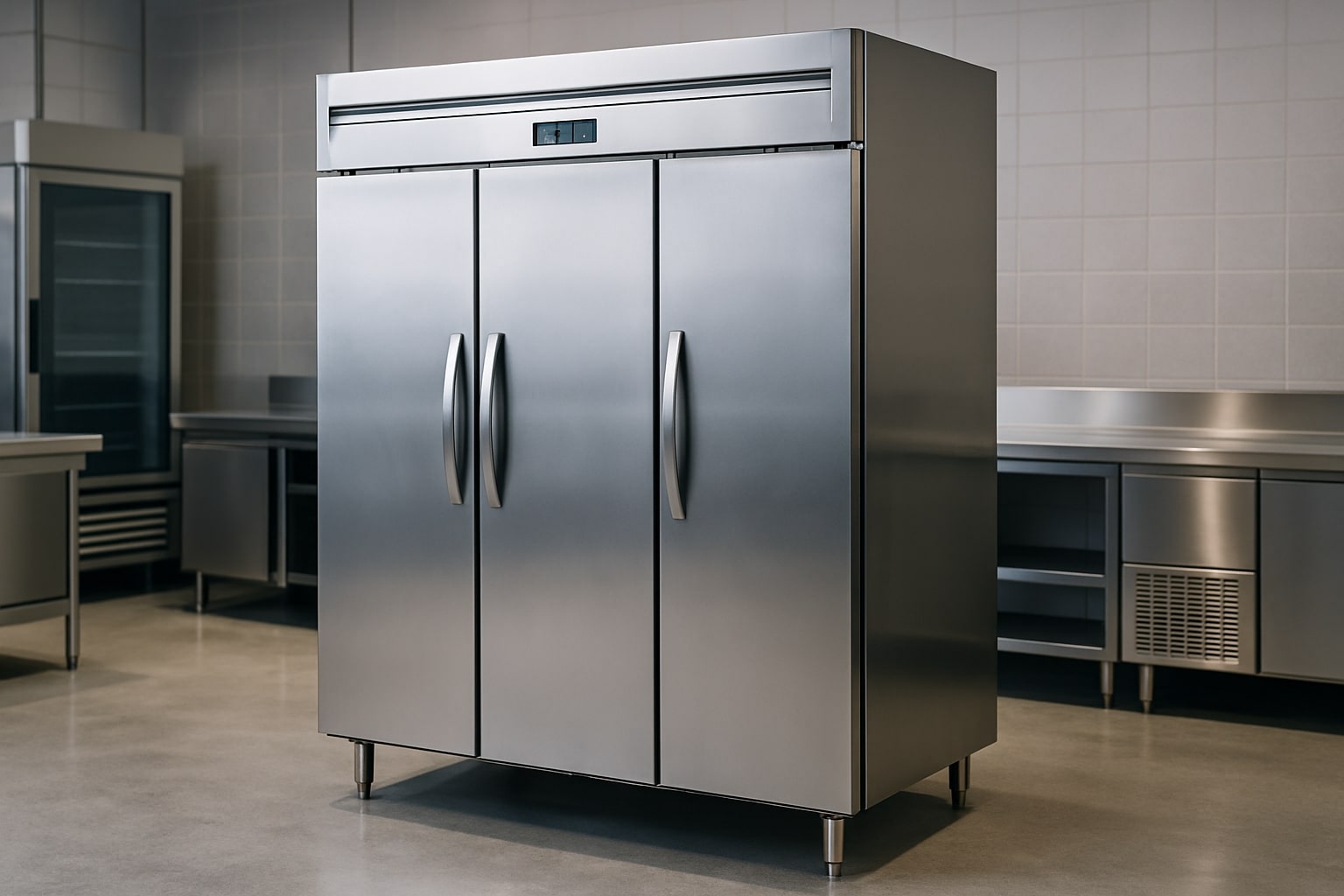
Another major advantage is their robust construction. Industrial refrigerators are typically made from stainless steel, offering resistance to corrosion, easy cleaning, and compliance with health regulations. Many models also feature adjustable shelving, door locks, digital thermostats, and eco-friendly refrigerants — elements that improve both functionality and sustainability.
Energy efficiency is another critical benefit. Modern industrial refrigerators are often equipped with advanced insulation, energy-saving LED lighting, and smart temperature control systems that reduce electricity consumption. Over time, this can result in significant savings on energy bills, especially in establishments where refrigeration units run continuously.
In summary, investing in an industrial refrigerator means investing in long-term reliability, food safety, and operational excellence. The advantages these units bring to the table make them indispensable in any professional kitchen environment.
How Much Do Industrial Refrigerators Cost?
The cost of an industrial refrigerator can vary widely based on a number of influencing factors, including size, design, brand reputation, and included features. While pricing is important, it’s equally vital to consider long-term operating costs and potential return on investment when planning a purchase.
Generally, larger units with advanced features — such as remote monitoring, dual cooling zones, or self-cleaning mechanisms — tend to be more expensive. Similarly, high-end energy-efficient models may have a higher initial price but will compensate through reduced electricity bills over time. The durability and expected lifespan of the refrigerator also play a role in justifying its overall value.
Installation requirements, maintenance schedules, and warranty coverage should also be factored into the overall cost assessment. Some units may require special ventilation, electrical upgrades, or flooring adjustments, which can contribute to upfront expenses. It's essential to work with a reputable supplier who can help you balance cost, functionality, and compliance with local regulations.
Ultimately, the true cost of an industrial refrigerator extends beyond its price tag — it encompasses its performance, energy consumption, reliability, and ability to support your business’s productivity. Careful evaluation of these elements will ensure that your investment delivers lasting value.


